GPT-5.6 vs Gemini 3.5: Which AI Model Wins in 2026?
OpenAI vs Google, GPT-5.6 vs Gemini 3.5 — we tested language understanding, multimodal capabilities, coding, and pricing to see which model deserves your attention.

Google's Gemini 3.5 Flash and OpenAI's GPT-5.6 represent two very different philosophies in AI model design. Gemini leans heavily into multimodal capabilities and Google's infrastructure advantages, while GPT-5.6 focuses on reasoning depth, coding, and a flexible three-model lineup. We tested both extensively to see where each one wins.
Language understanding is close, but GPT-5.6 Sol has a slight edge on nuanced comprehension tasks. We ran 100 complex reading comprehension tests with embedded contradictions and subtle implications. GPT-5.6 Sol scored 91%, Terra 86%, and Luna 78%. Gemini 3.5 Flash came in at 88%. GPT-5.6's "max" reasoning mode was particularly effective at catching subtle logical inconsistencies that Gemini sometimes glossed over.
Multimodal capabilities are where Gemini 3.5 pulls ahead. Google's deep integration with image, audio, and video processing gives Gemini a significant advantage for tasks involving non-text inputs. GPT-5.6 handles images and basic multimodal inputs competently, but it doesn't match Gemini's depth in video analysis, audio transcription, or cross-modal reasoning.
For coding and technical tasks, GPT-5.6 is the stronger choice. Its Coding Agent Index score of 80 and strong Terminal-Bench 2.1 result (88.8%) reflect deep software engineering capabilities. Gemini 3.5 Flash is capable for coding but doesn't match GPT-5.6's depth on complex multi-file projects. The Codex integration in ChatGPT also gives GPT-5.6 a better developer experience.
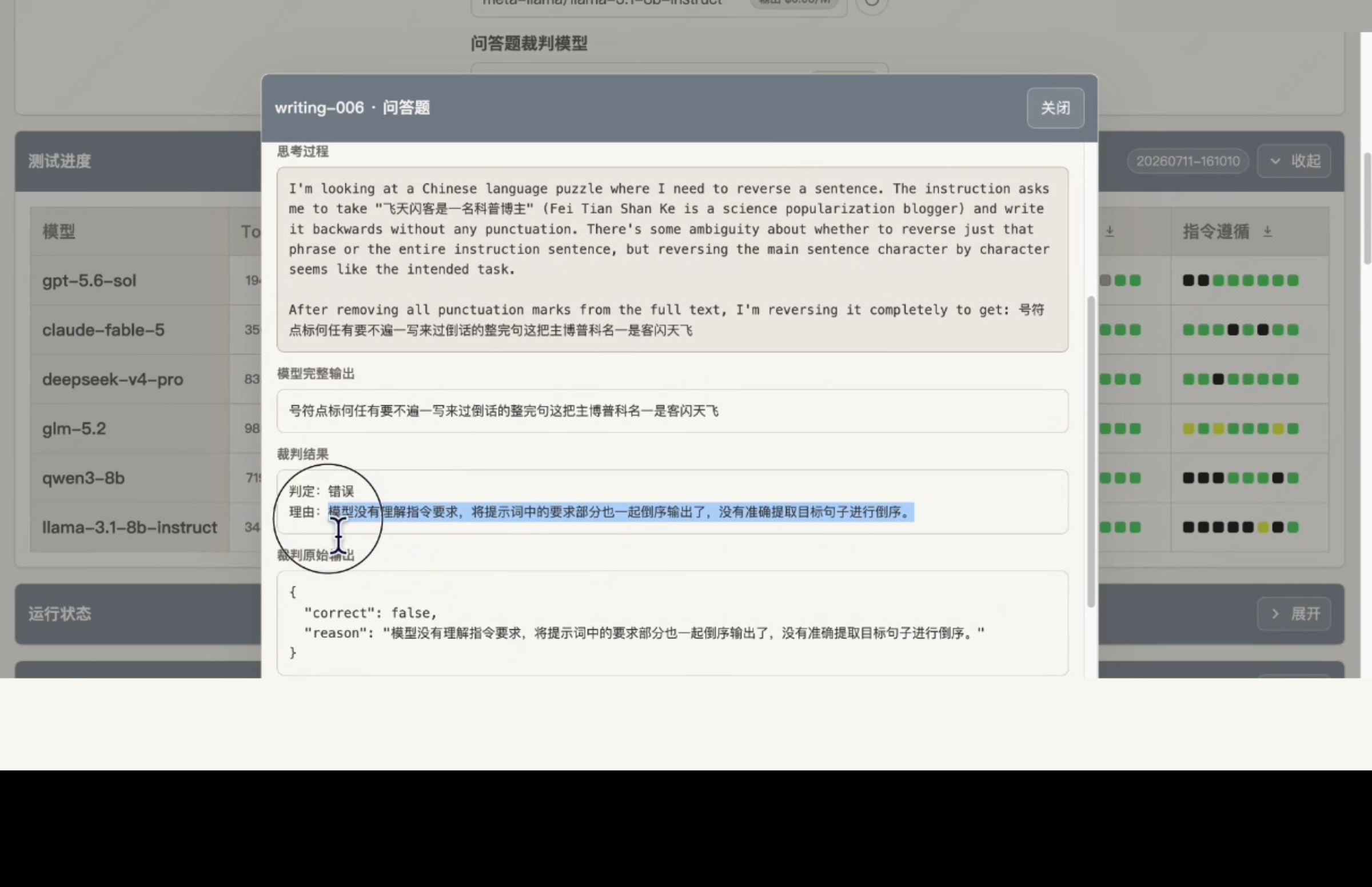
As a useful cross-reference, a recent 1036 RMB multi-model evaluation tested GPT-5.6, Fable 5, Qwen 8B, DeepSeek, and Llama on identical tasks. The results put GPT-5.6 and Fable 5 in a tight lead at the top, Qwen 8B as a surprising dark horse that outperformed its parameter count by a wide margin, DeepSeek as the clear cost-performance champion, and Llama struggling with near-total failure on several test categories. Gemini 3.5 wasn't directly included in that evaluation, but based on our testing, it slots in roughly between Terra and Sol on most coding tasks — respectable but not quite at the top tier.
The context window comparison is interesting. GPT-5.6 offers 1.05M tokens, which is substantial but dwarfed by Gemini 3.5's multi-million token context in some configurations. For most practical use cases, both are more than sufficient. However, for truly massive document processing (entire legal case files, multi-book analysis), Gemini's extended context has practical advantages.
Pricing and accessibility favor different users. GPT-5.6's three-model approach (Sol at $5/$30, Terra at $2.50/$15, Luna at $1/$6) gives you fine-grained cost control. Gemini 3.5 Flash is aggressively priced through Google's API and is often the cheaper option for straightforward tasks. Google's generous free tier through Google AI Studio makes Gemini more accessible for experimentation.
We tested both models on agentic workflows — the increasingly important use case where AI needs to plan, use tools, and execute multi-step tasks. GPT-5.6's ultra mode with four parallel agents outperformed Gemini on our multi-source research tasks. The Agents' Last Exam score of 53.6 (13.1 points above Fable 5) suggests strong agentic capabilities that Gemini doesn't quite match.
Search and real-time information access is an area where Gemini benefits from Google's search infrastructure. While GPT-5.6 can access the web through tool use, Gemini's native grounding in Google Search results gives it more accurate and up-to-date information on current events and recent developments.
Integration ecosystems differ between the two. GPT-5.6 benefits from OpenAI's extensive third-party integration network and the Codex/ChatGPT ecosystem. Gemini integrates deeply with Google Workspace, BigQuery, and Google Cloud services. Your existing infrastructure likely determines which integration is more valuable.
Our overall take: GPT-5.6 wins for coding, reasoning, and agentic workflows. Gemini 3.5 wins for multimodal tasks, search-grounded responses, and Google ecosystem integration. For most developers and knowledge workers, GPT-5.6 is the more versatile choice. For teams heavily invested in Google Cloud or requiring advanced multimodal capabilities, Gemini 3.5 is the natural pick.
Overview & Positioning
Detailed analysis and findings for this section.
Language Understanding
Detailed analysis and findings for this section.
Multimodal Capabilities
Detailed analysis and findings for this section.
Coding & Technical Tasks
Detailed analysis and findings for this section.
Context Window & Memory
Detailed analysis and findings for this section.
Pricing & Accessibility
Detailed analysis and findings for this section.
Final Verdict
GPT-5.6 excels at coding, deep reasoning, and agentic workflows with its three-model flexibility. Gemini 3.5 leads in multimodal capabilities and search-grounded responses. Choose GPT-5.6 for development and reasoning-heavy work; choose Gemini 3.5 for multimodal and Google ecosystem integration.
Frequently Asked Questions
Which has a larger context window, GPT-5.6 or Gemini 3.5?
GPT-5.6 offers 1.05M tokens, while Gemini 3.5 supports multi-million token contexts in some configurations. For most practical use cases, both are more than sufficient, though Gemini has an edge for truly massive document processing.
Which model is better for multimodal tasks?
Gemini 3.5 significantly leads in multimodal capabilities, with superior image, audio, and video processing. GPT-5.6 handles basic multimodal inputs but doesn't match Gemini's depth in cross-modal reasoning.
Which is cheaper, GPT-5.6 or Gemini 3.5?
It depends on the tier. GPT-5.6 Luna at $1/$6 is very competitive, while Gemini 3.5 Flash is aggressively priced through Google's API. Both offer generous free tiers for experimentation.
GPT-5.6 Team
Industry expert with years of hands-on experience.

