GPT-5.6 API Integration: A Step-by-Step Tutorial
A hands-on tutorial for integrating GPT-5.6 into your applications — from API key setup to streaming responses, tool calling, and ultra mode via the OpenAI API.

Getting GPT-5.6 into your application is straightforward if you've used the OpenAI API before. The API format is identical to previous models, but there are new parameters for the three-model lineup, max reasoning mode, and ultra mode that you'll want to understand. Let's walk through everything step by step.

A key context piece before we start: OpenAI has merged ChatGPT and Codex into a unified product called ChatGPT Work. This isn't just a branding change — it means the coding capabilities (sandboxed execution, file manipulation, multi-step tool use) are now deeply integrated into the core ChatGPT experience. If you're building on the API, this integration pattern is worth understanding because it shapes how the models behave in practice.
First things first: get your API key from the OpenAI developer dashboard. Store it as an environment variable (OPENAI_API_KEY) and never hardcode it in your source. The OpenAI SDK for Python and Node.js both support GPT-5.6 out of the box — just make sure you're running the latest version. Install with pip install --upgrade openai or npm install openai.
Choosing the right model matters for both cost and quality. The three model identifiers are gpt-5.6-sol (flagship, $5/$30 per million tokens), gpt-5.6-terra (balanced, $2.50/$15), and gpt-5.6-luna (fast, $1/$6). For most applications, start with Terra and upgrade to Sol only when you hit quality limits. Use Luna for high-volume, simple tasks.
Making your first API call is simple. Use the standard chat completions endpoint with your chosen model identifier. The response format is identical to previous GPT models, so your existing parsing code will work without changes. Set max_tokens to control output length — the new maximum is 128K tokens across all three models.
Streaming responses are essential for good user experience in chat applications. Set stream: true in your request to receive tokens incrementally via server-sent events. All three GPT-5.6 models support streaming, and the latency before the first token varies by model: Luna is fastest (~200ms), Terra (~500ms), and Sol (~1s, longer with max mode).
Tool use and function calling work the same way as previous models but with improved reliability. Define your tools in the standard OpenAI function schema, and GPT-5.6 will decide when to call them. The new programmatic tool use capability means the model can chain multiple tool calls, parse results, and make follow-up calls without returning to you between steps.
Using ultra mode via API requires setting the reasoning_effort parameter to "ultra" in your request. This activates four parallel agents that work on different aspects of your query simultaneously. The response includes metadata about how the work was distributed. Ultra mode works best with Sol but is available on all three models. Expect 3-4x the token consumption.
Error handling and rate limits follow OpenAI's standard patterns. Implement exponential backoff for 429 (rate limit) and 500/503 (server error) responses. The three GPT-5.6 models have separate rate limits, so you can configure different retry strategies per model. Luna's lower price point means you can afford more aggressive retry logic without cost concerns.
For production deployment, consider these patterns: use model routing (Luna for simple tasks, Terra for medium, Sol for complex) to optimize costs; implement response caching for repeated queries; use streaming for user-facing applications; and set up monitoring for token usage across all three models to catch cost anomalies early.
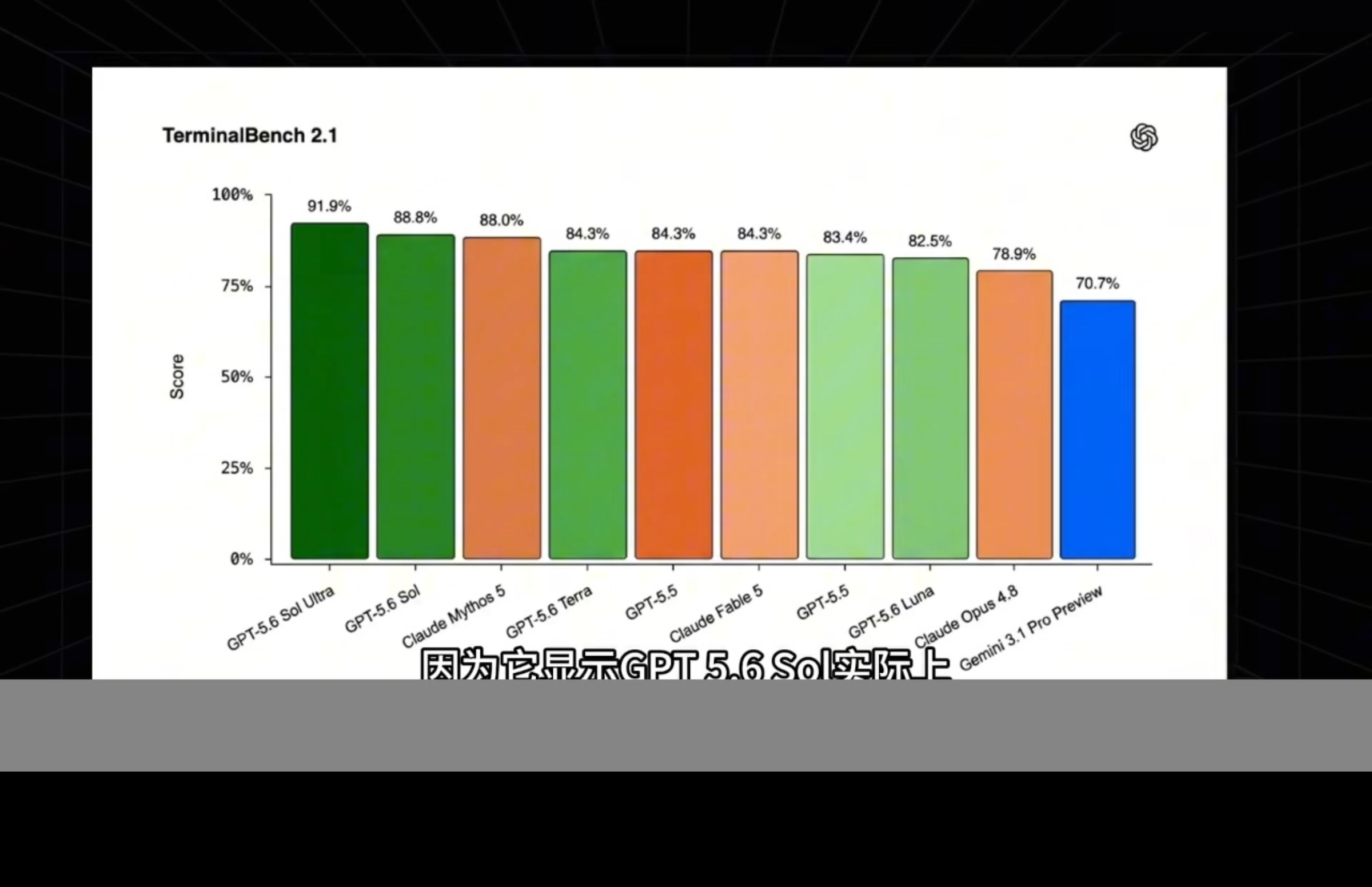
One practical note on model access: OpenAI's release strategy for GPT-5.6 has been notably phased. The model went through a government safety review before GA, and certain capabilities are being rolled out in stages rather than all at once. This contrasts with Anthropic's approach and means you should check the API documentation for which features are currently available on each model tier. The phased rollout actually gives developers time to test and adapt without being overwhelmed by simultaneous capability drops.
Next steps: explore the OpenAI Cookbook for GPT-5.6-specific examples, check the API reference for the full parameter list, and experiment with max and ultra modes on your actual use cases. The playground in the OpenAI dashboard lets you test all three models side by side before writing any code.
Prerequisites & Setup
Detailed analysis and findings for this section.
Choosing the Right Model
Detailed analysis and findings for this section.
Making Your First API Call
Detailed analysis and findings for this section.
Streaming Responses
Detailed analysis and findings for this section.
Tool Use & Function Calling
Detailed analysis and findings for this section.
Using Ultra Mode via API
Detailed analysis and findings for this section.
Error Handling & Rate Limits
Detailed analysis and findings for this section.
Production Deployment
Detailed analysis and findings for this section.
Next Steps
GPT-5.6's API is a natural extension of the existing OpenAI API with new model identifiers, reasoning modes, and ultra mode. Start with Terra for balanced cost-quality, implement model routing for production, and leverage the 128K max output and 1.05M context window for complex applications.
Frequently Asked Questions
How do I get a GPT-5.6 API key?
Visit the OpenAI developer dashboard, create an account (or sign in), and generate a new API key. Store it securely as an environment variable. All three GPT-5.6 models are accessible with a single API key.
What are the rate limits for GPT-5.6?
Rate limits vary by model and account tier. Sol has tighter limits due to higher compute costs. Luna has the most generous limits. Check your account dashboard for specific RPM (requests per minute) and TPM (tokens per minute) limits.
Does GPT-5.6 support streaming responses?
Yes, all three GPT-5.6 models support streaming via server-sent events. Set stream: true in your API request for real-time token-by-token output, essential for chat applications.
GPT-5.6 Team
Industry expert with years of hands-on experience.
