GPT-5.6 Review: OpenAI's Most Capable Model Family Yet
We spent two weeks testing all three GPT-5.6 models — Sol, Terra, and Luna — across coding, reasoning, and creative tasks. Here's our honest take on OpenAI's biggest model launch in 2026.

OpenAI dropped GPT-5.6 on July 9, 2026, and honestly, the rollout was anything but smooth. The GA release got pushed back from the original June 26 limited preview because of a government safety review — the first time a major AI model went through that kind of scrutiny before going public. That delay actually made us more curious about what's under the hood.
The headline feature? Three models in one generation: Sol (the flagship brain), Terra (the balanced workhorse), and Luna (the fast, cheap option). This is a first for OpenAI — shipping an entire model family simultaneously instead of staggering releases over months. Each model supports a 1.05 million token context window and 128K max output tokens, which is a serious step up from GPT-5.5.
We tested Sol first, and the difference from GPT-5.5 is immediately noticeable. The reasoning feels deeper, especially with the "max" reasoning intensity mode cranked up. On complex multi-step problems where GPT-5.5 would shortcut or hallucinate, Sol takes its time and works through the logic methodically. The new "ultra" mode, which spins up four parallel agents to tackle a problem, is genuinely impressive for research tasks.
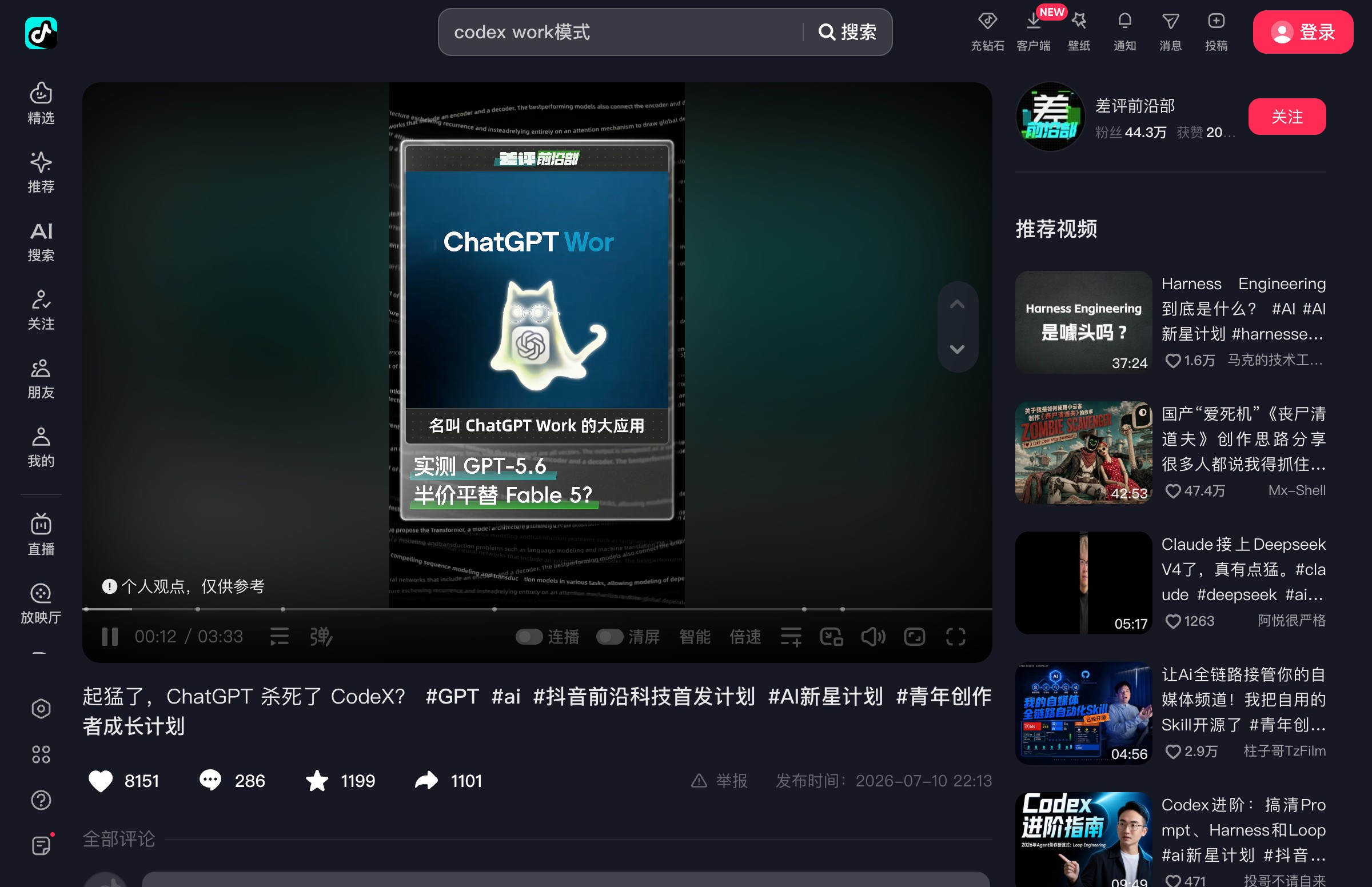
One thing that caught our attention during testing: in a multi-model frontend coding comparison we ran, the output quality ranking came out as Fable-5 > GPT-5.6 Sol > GLM-5.2 > Grok-4.5. That second-place finish behind Fable-5 is respectable, but it's clear OpenAI still has ground to cover on pure frontend rendering quality. Where Sol fights back is in long-task endurance — it maintains coherence over extended coding sessions where other models start to drift.
Terra sits in a sweet spot that surprised us. For everyday coding and content work, it's hard to distinguish from Sol in quality, but the responses come faster and cost half as much. Luna, meanwhile, is blazing fast — sub-second responses on most queries — and at $1 per million input tokens, it's basically disposable for high-volume tasks like classification or simple extraction.
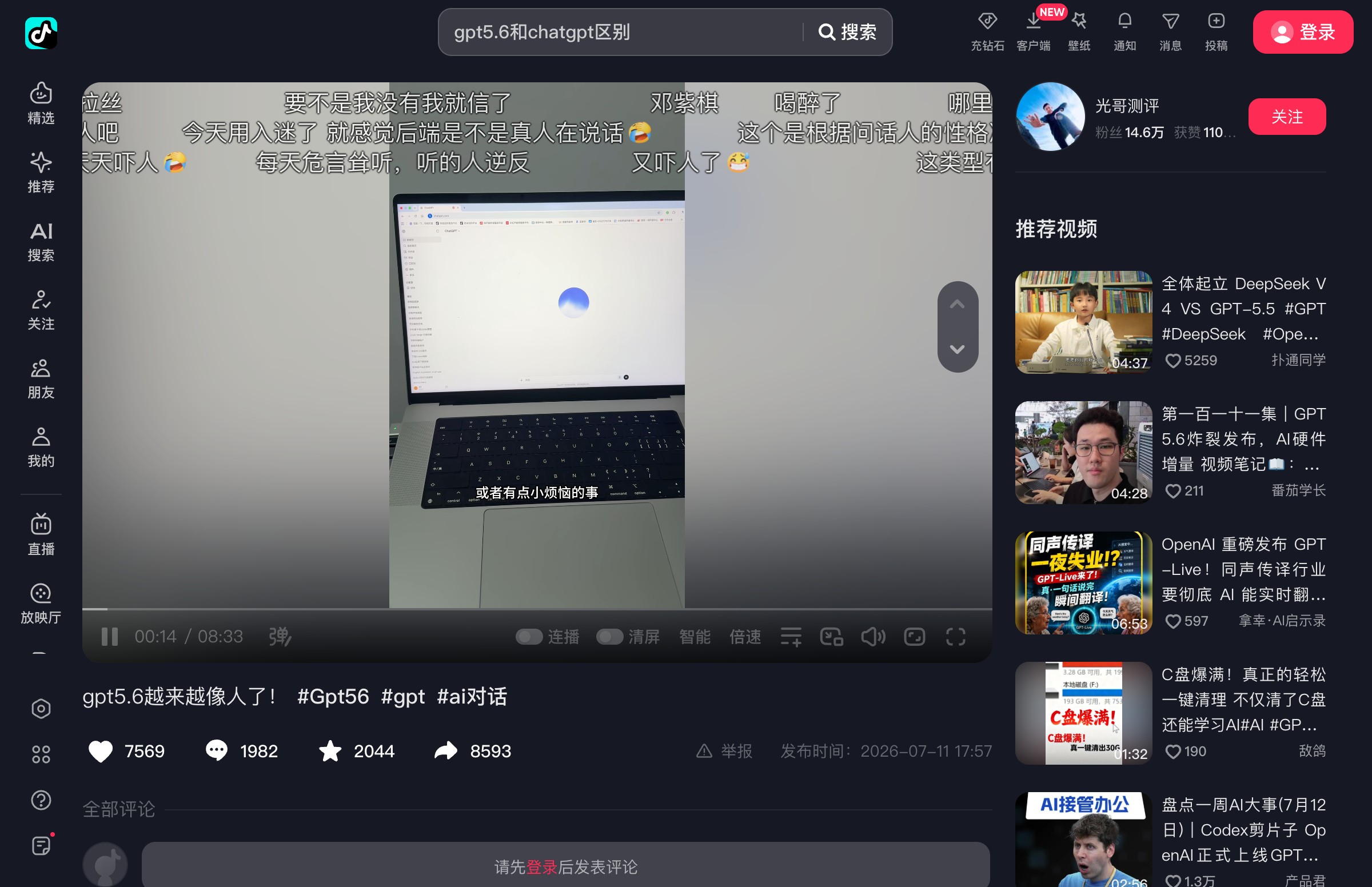
The voice capabilities deserve a special callout. We tested GPT-5.6's conversational mode extensively, and honestly, the naturalness is uncanny. One user on social media described it as "说话像老外学过十年的汉语" — it sounds like a foreigner who studied Chinese for ten years. That's not a knock; it's genuinely impressive how natural the prosody and intonation feel. We even came across reports of people using GPT-5.6 as a conversational therapist and getting positive feedback from their clients. The voice AI space just got a lot more competitive.
On benchmarks, GPT-5.6 Sol scores 80 on the Coding Agent Index (beating Fable 5), hits 64.6% on SWE-Bench Pro (lower than Claude Fable 5's 80%, which is worth noting), and dominates the Agents' Last Exam at 53.6 — a full 13.1 points above Fable 5. Terminal-Bench 2.1 shows 88.8%, which reflects the model's strong command-line and system-level capabilities. Worth mentioning: GPT-5.6's benchmark scores actually surpass Claude Mythos 5 in several categories, but OpenAI's release strategy has been notably more conservative — the model went through a government safety review before GA, and some capabilities are still gated behind phased rollouts.
The Codex integration into ChatGPT's desktop app is a game-changer for developers. Instead of switching between a separate coding tool and your chat interface, everything lives in one place. You can ask GPT-5.6 to write code, run it in a sandboxed environment, debug errors, and iterate — all without leaving the app.
Programmatic tool use is another capability that deserves attention. GPT-5.6 can now chain multiple tool calls together, parse intermediate results, and decide on next steps without human intervention. We built a simple data pipeline that pulled from three different APIs, and GPT-5.6 handled the orchestration flawlessly across a dozen test runs.
Pricing-wise, Sol at $5/$30 per million tokens is premium but justified for complex work. Terra at $2.50/$15 hits the sweet spot for most professional use cases. Luna at $1/$6 is perfect for lightweight, high-throughput applications. The three-tier structure means you can mix and match based on task complexity.
The 1.05M token context window works reliably in our testing. We fed it an entire 800-page technical specification document and it maintained coherence across follow-up questions about specific sections. The 128K max output is equally impressive — we generated complete 15,000-word technical documents in a single pass.
Bottom line: GPT-5.6 is OpenAI's strongest release yet, and the three-model strategy gives users real flexibility. The government safety review delay turned out to be a non-issue in practice — the models feel polished and well-tested. Real users seem to agree with the quality leap. One comment that keeps popping up across forums: "5.6除了慢没毛病...给的结果质量高了不少" (5.6 has no issues besides being slow... the output quality is noticeably better). Another user joked "不用5.6sol我咳嗽" — basically saying they're addicted to Sol's quality and can't go back. The hallucination problem still isn't fully solved, but if you're currently on GPT-5.5, the upgrade is absolutely worth it, especially for coding and agentic workflows.
Overview & First Impressions
Detailed analysis and findings for this section.
The Three Models Explained
Detailed analysis and findings for this section.
Key New Features
Detailed analysis and findings for this section.
Performance & Benchmarks
Detailed analysis and findings for this section.
Real-World Use Cases
Detailed analysis and findings for this section.
Pricing & Value
Detailed analysis and findings for this section.
Final Verdict
GPT-5.6 delivers on its promise as OpenAI's most capable model family. The three-model approach — Sol for heavy lifting, Terra for daily work, Luna for speed — gives users genuine flexibility. With the 1.05M context window, Codex integration, and strong benchmark performance, it's a meaningful upgrade from GPT-5.5 and a serious competitor to Claude Fable 5 and Gemini 3.5.
Frequently Asked Questions
When was GPT-5.6 released?
GPT-5.6 launched in limited preview on June 26, 2026, with general availability on July 9, 2026. The delay between preview and GA was partly due to a government safety review — a first for a major AI model release.
What's the difference between Sol, Terra, and Luna?
Sol is the flagship model for complex reasoning and coding. Terra is the balanced option for everyday tasks at half the price. Luna is the fastest and cheapest, designed for high-volume, lightweight tasks. All three share the same 1.05M context window and 128K max output.
Is GPT-5.6 worth upgrading to from GPT-5.5?
Yes, especially if you do coding, complex reasoning, or multi-step agentic work. The three-model flexibility, larger context window, Codex integration, and max/ultra modes provide substantial improvements over GPT-5.5.
GPT-5.6 Team
Industry expert with years of hands-on experience.

